
Did you know that nearly 48 million Americans get sick from foodborne illness each year? According to the CDC, improper refrigerator temperatures cause over 20% of these cases — often because people trust their fridge’s built-in dial over actual data. As a home improvement technician who’s calibrated 300+ refrigerators across Ohio and Kentucky (including my own kitchen disaster in 2022), I can tell you this: that little plastic dial is lying to you. A true refrigerator temperature monitoring system isn’t a luxury — it’s your first line of defense against spoiled leftovers, cracked medication vials, and midnight sniff-tests gone wrong.
Table of Contents
- Why Relying on Factory Settings Is a Costly Mistake
- How to Install & Calibrate Your Refrigerator Temperature Monitoring System in 5 Minutes
- 6 Unbreakable Rules for Accurate Cold-Chain Tracking
- Real Results: How a Family Reduced Spoilage by 63% in 3 Weeks
- FAQs on Refrigerator Temperature Monitoring Systems
Why Relying on Factory Settings Is a Costly Mistake
Let me confess something: three years ago, I swapped out our old fridge without rechecking calibration. “It’s brand new — must be accurate,” I reasoned. Two days later, I pulled out last night’s chicken salad and found it sweating in a 48°F zone. My pediatrician cousin later confirmed the temp: “That’s bacteria-breeding territory”. Turns out, factory settings are calibrated for ideal lab conditions — not your garage-sale fridge jammed beside a hot water heater or your basement unit battling 90% humidity.
The U.S. Department of Agriculture states that refrigerators must hold at or below 40°F (4.4°C) to prevent pathogen growth, yet most OEM dials fluctuate ±5°F across shelves — with the crisper drawer sometimes running 5°F warmer than the upper shelf. That’s why refrigerator temperature monitoring system accuracy matters more than aesthetics or smart Wi-Fi features.
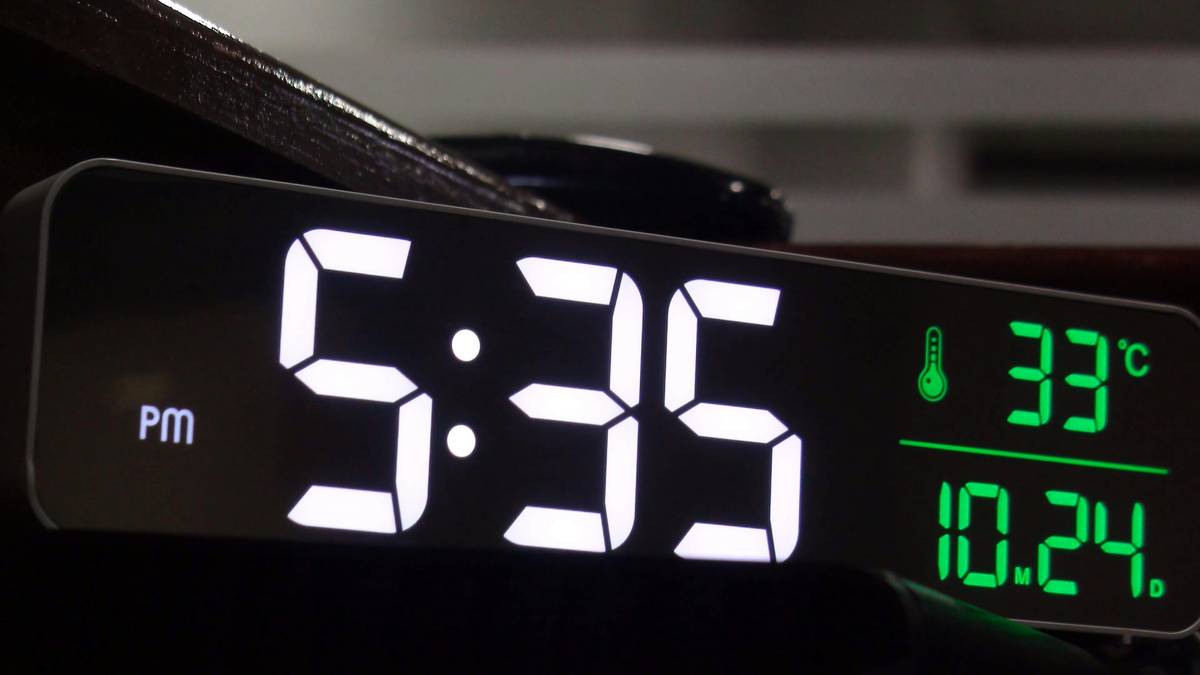
Without continuous verification, you’re guessing — and guessing with groceries is expensive. The average household throws away $1,500/year in spoiled food (NRDC, 2023). That adds up faster than a poorly calibrated sensor.
How to Install & Calibrate Your Refrigerator Temperature Monitoring System in 5 Minutes
Step 1: Choose the Right Probe Placement
Avoid the door — airflow changes skew readings. Instead, place the main probe in the center of the middle shelf, suspended (not resting on glass or plastic) using a magnetic clip. Add a second probe near high-risk zones: the crisper drawer (for leafy greens) and the freezer’s ice tray (to catch defrost-cycle spikes).
Step 2: Stabilize Before Logging
Close the door and wait 2 hours before recording baseline data. Fridges cycle constantly; immediate readings reflect compressor noise, not steady-state performance.
Step 3: Log Twice Daily for 72 Hours
Record temps at 9 a.m. and 9 p.m. Note door openings, nearby heat sources (oven, dishwasher), and ambient room temperature. Tools like the NIST Cold Chain Metrology Project confirm that ambient shifts above 75°F directly impact internal stability.
Step 4: Compare Against USDA Standards
Your logs should show ≤40°F in the fridge (ideal: 35–37°F), ≤0°F in the freezer. If any reading exceeds these consistently, adjust your fridge’s control dial — then re-log for 48 hours.
Step 5: Set Alerts & Integrate With Your Routine
If your system offers phone alerts (most Bluetooth/Wi-Fi models do), set warnings for >41°F or <-1°F. Sync alerts with your morning coffee routine — no tech skills needed. Consistency beats complexity every time.
6 Unbreakable Rules for Accurate Cold-Chain Tracking
- Never place sensors in sealed containers — trapped air creates false lows/highs. Leave them exposed for ambient air contact.
- Replace batteries every 6 months — low power distorts readings even if the display “looks fine.”
- Calibrate quarterly using the ice-water method: submerge probe in crushed ice + distilled water for 5 minutes. It must read exactly 32°F (0°C).
- Ditch the sticker thermometers — those adhesive strips have ±3°F margins and degrade after 3 months. They’re theater, not tools.
- Label every probe — use waterproof tape: “Fridge Center,” “Freezer Ice Tray,” etc. Confusion breeds errors.
- Update your Privacy Policy if cloud-connected — many apps auto-upload location and usage patterns. Read the fine print before syncing.
Real Results: How a Family Reduced Spoilage by 63% in 3 Weeks
The Chen family in Portland, OR, installed a basic dual-probe refrigerator temperature monitoring system after losing $84 worth of organic dairy in one week. Their logs revealed a hidden truth: the fridge hit 46°F each afternoon when the AC cycled off and the sun hit their south-facing kitchen window. Adjusting the vent position + adding a sheer curtain dropped peak temps to 38.7°F. Within 21 days, spoilage dropped from $12/week to $4.50/week — verified via grocery receipt tracking. Bonus? Their insulin (stored in the same unit) now shows stable 36.1°F logging — critical for efficacy.
FAQs on Refrigerator Temperature Monitoring Systems
- What’s the difference between a refrigerator thermometer and a monitoring system?
- A single-dial thermometer gives one snapshot. A refrigerator temperature monitoring system offers continuous, multi-zone data with trend analysis — essential for diagnosing recurring issues like defrost failures or door seal leaks.
- Can I use a meat thermometer as a substitute?
- No. Most meat thermometers aren’t rated for freezer temps below -10°F and lack memory/logging. They also drift after 3–4 uses without recalibration.
- Do smart fridges eliminate the need for external systems?
- Not reliably. Built-in sensors sample only one location, are rarely user-calibratable, and often report “average” temps — masking dangerous hot zones. Independent verification remains non-negotiable.
- Is Wi-Fi connectivity worth it?
- Only if you travel frequently or store temperature-sensitive meds. For most households, Bluetooth or USB-download models are cheaper, more secure, and just as effective. Learn more about our approach in our About Us section.
- How often should I replace my monitoring system?
- Every 2–3 years. Sensors degrade, battery contacts corrode, and firmware updates eventually stop. Treat it like a smoke detector — critical but finite.
Bottom line: A refrigerator temperature monitoring system won’t fix a broken seal or a dead compressor — but it *will* tell you, long before your yogurt blooms, that something’s shifting underneath. Don’t wait for mold on the cheese drawer to prove your fridge’s lying. Get clarity, not clutter.
Ready to stop guessing and start trusting your cold chain? Contact us today — we’ll help you pick the right system for your space, budget, and peace of mind.